72.5% of companies see Artificial Intelligence as an ally to improve their logistics

9 de April de 2026
- 6% of companies that consume logistics services already use at least one Artificial Intelligence tool or are in the process of implementing it.
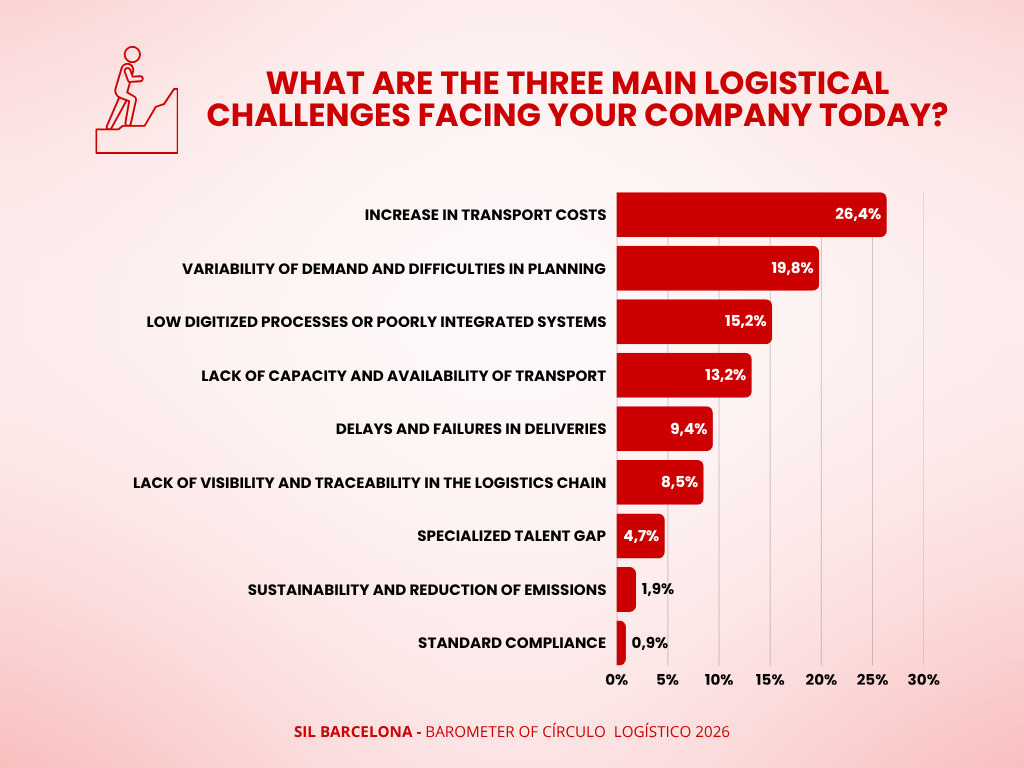
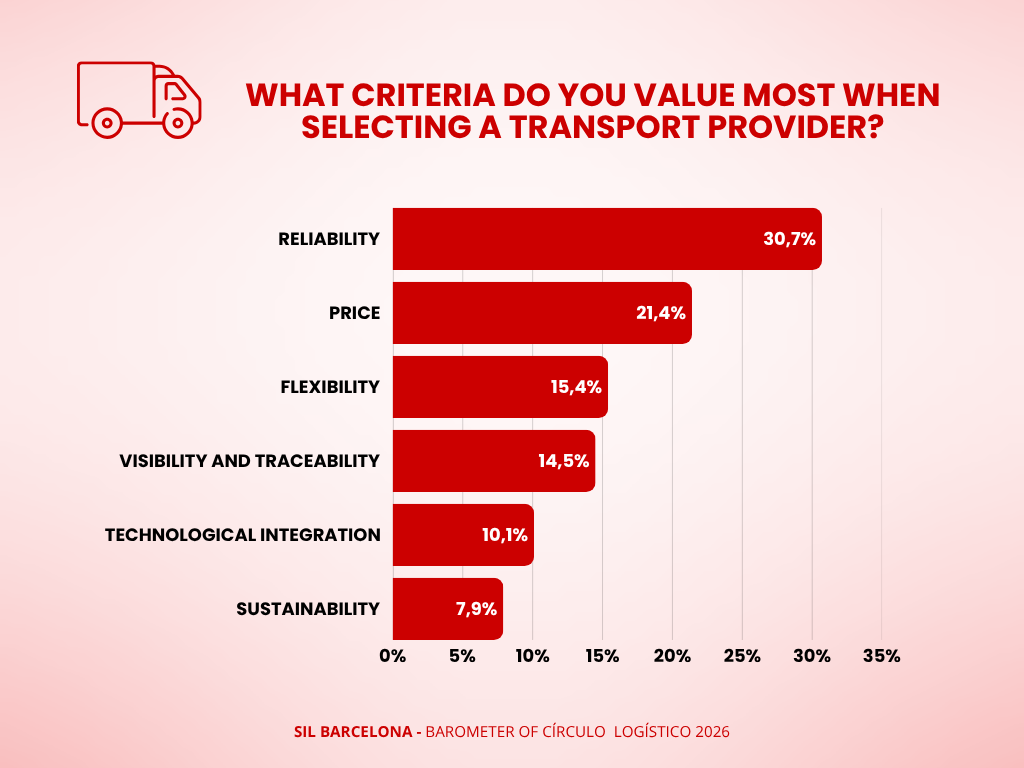
- Rising transportation costs are the main logistics challenge faced by 26.4% of companies, while the most valued criterion when selecting a provider is reliability, cited in 30.7% of cases.
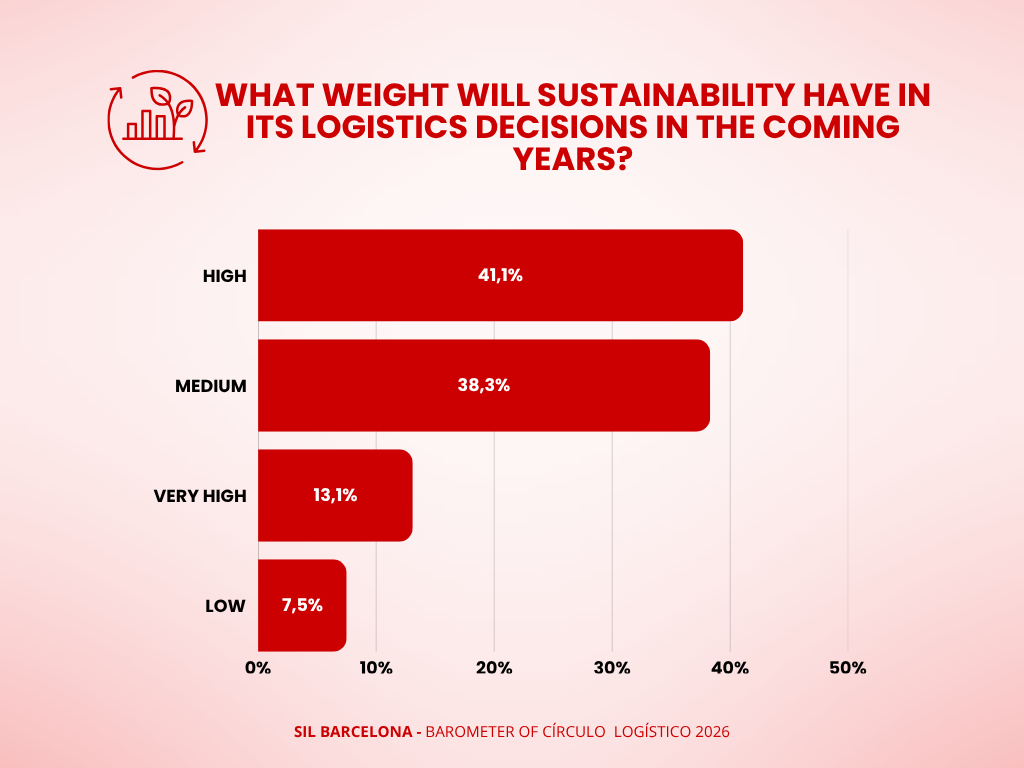
- Sustainability will continue to play a significant role in logistics decision‑making for 92.5% of respondents, compared with 7.5% who consider it to be of little relevance.
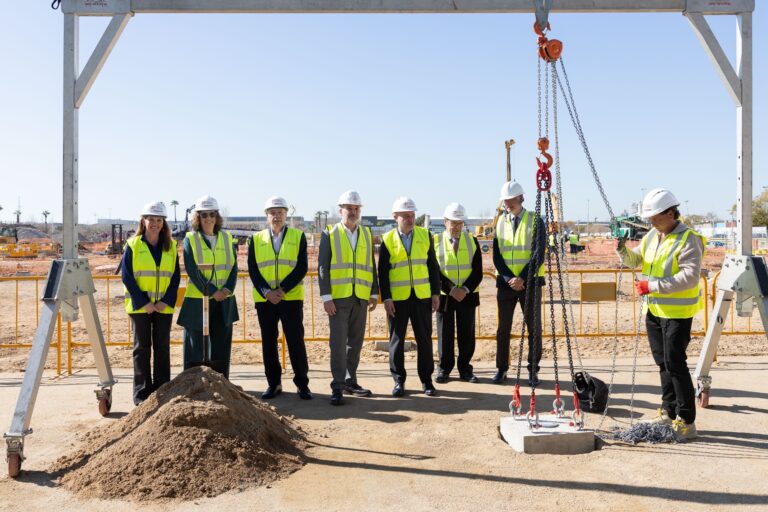
Barcelona, 9 April 2026. – Artificial Intelligence is gaining increasing trust among industrial companies that rely on logistics services, as they view this technology as an ally for enhancing their operations. This is one of the key findings of the 16th Círculo Logístico Barometer 2026, published by SIL Barcelona, the leading trade fair for Logistics, Transport, Intralogistics and Supply Chain, organised by the Consorci de la Zona Franca de Barcelona (CZFB). The event will be held from 3 to 5 June at Fira Barcelona, Montjuïc.
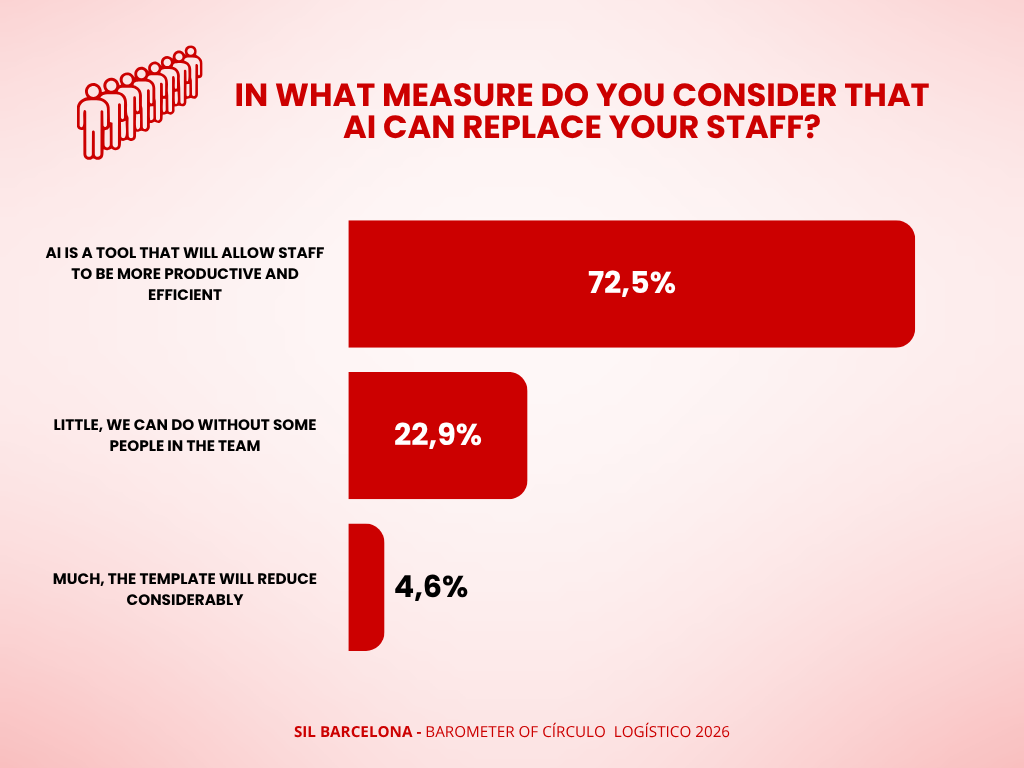
According to the 16th SIL 2026 Círculo Logístico Barometer, the sector is firmly committed to innovation and, more specifically, to Artificial Intelligence. In fact, 72.5% of logistics directors and managers who took part in the study strongly believe that AI will enable their staff to become more productive and efficient, and that it will in no way have a negative impact on their workforce. Likewise, 22.9% indicate that, should there be any impact, it would be minimal, as only a small number of positions within their teams would be affected; and only 4.6% of respondents foresee a significant reduction in staff
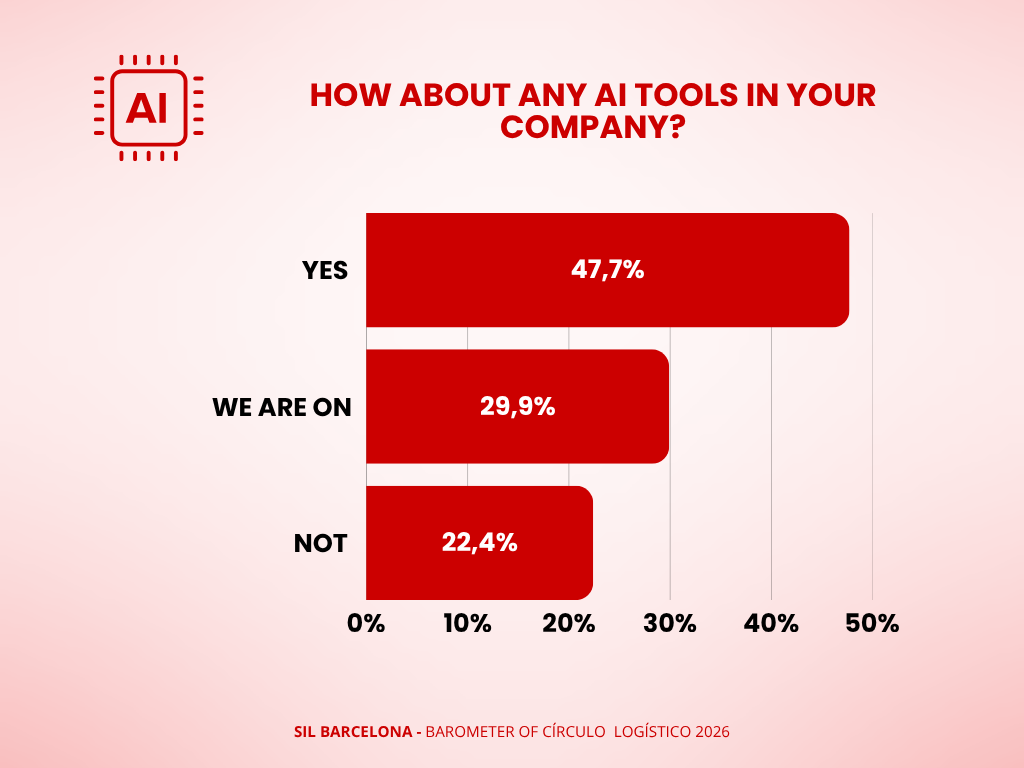
In this regard, 76.6% of these companies already use at least one AI tool or are in the process of implementing it, compared with 22.4% that have not yet taken this step. This figure confirms that companies continue to place their trust in AI one year after being surveyed, as 76.3% already did so in 2025
AI and Startups: Strong Performance
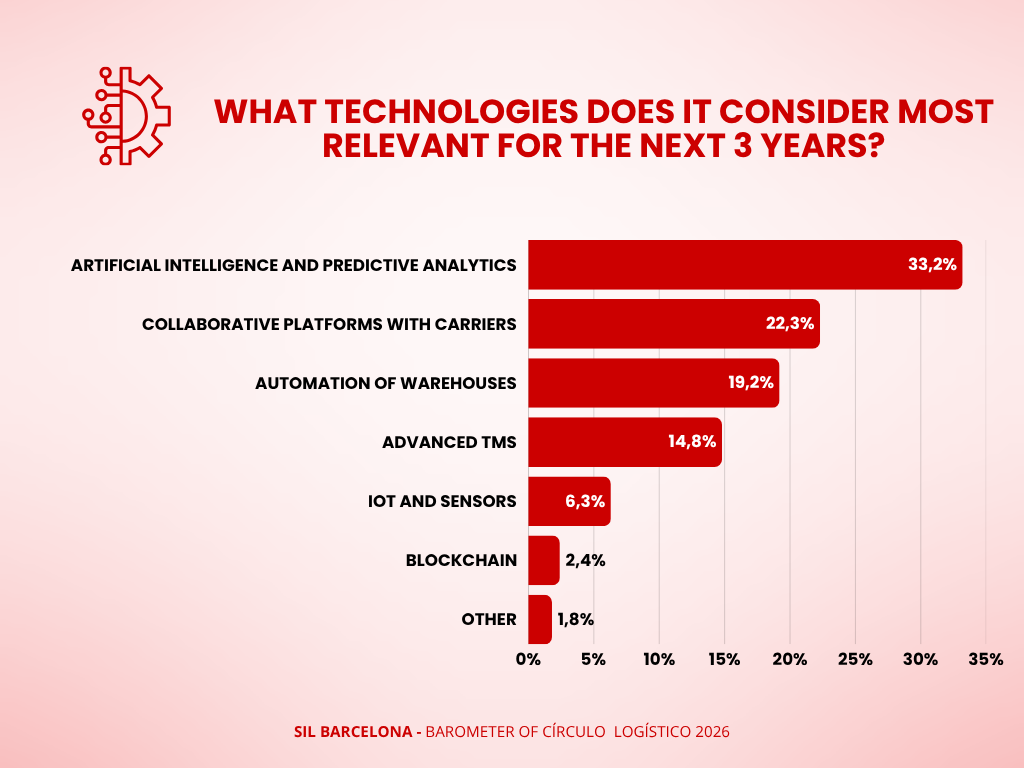
In this context, Artificial Intelligence and predictive analytics have been identified as the most relevant technologies for the next three years by 33.2% of the professionals surveyed. Collaborative platforms with carriers also gain prominence, according to 22.3% of respondents, followed by warehouse automation, highlighted by 19.2%
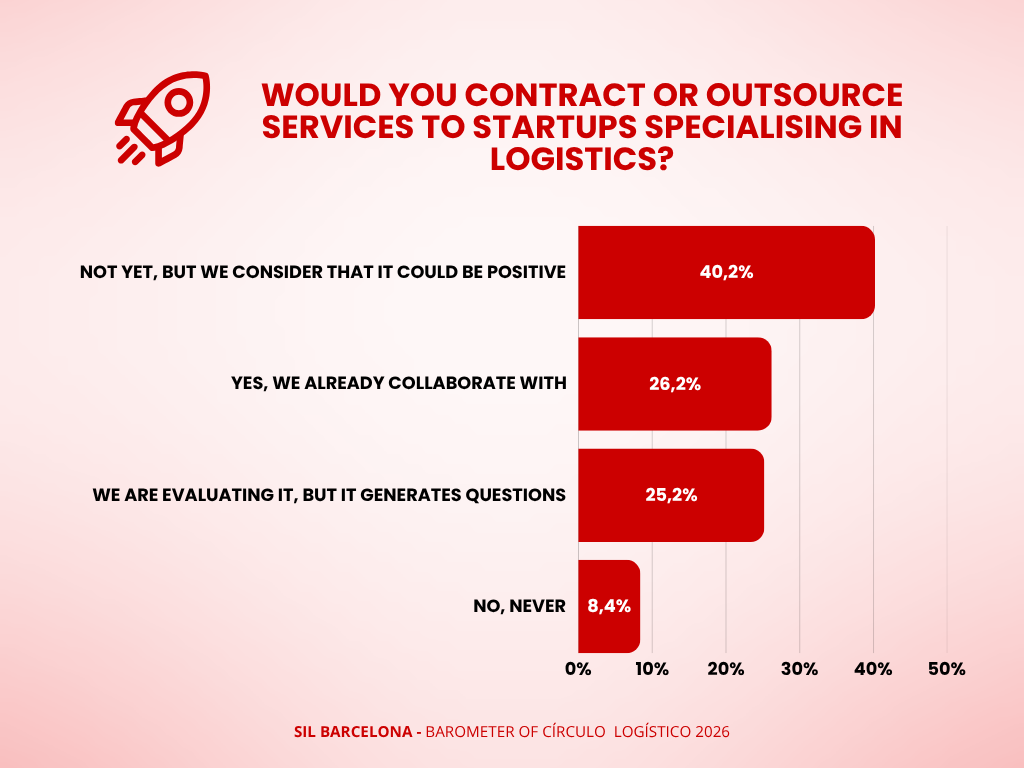
Startups, for their part, continue to gain increasing acceptance among companies that consume logistics services. Currently, 66.4% of the sample surveyed view favourably the idea of contracting or outsourcing services to logistics‑focused startups; in fact, 26.2% already collaborate with at least one of them, a figure that exceeds the 24.8% recorded the previous year.
Process Digitalisation and Systems Integration: Ongoing Challenges
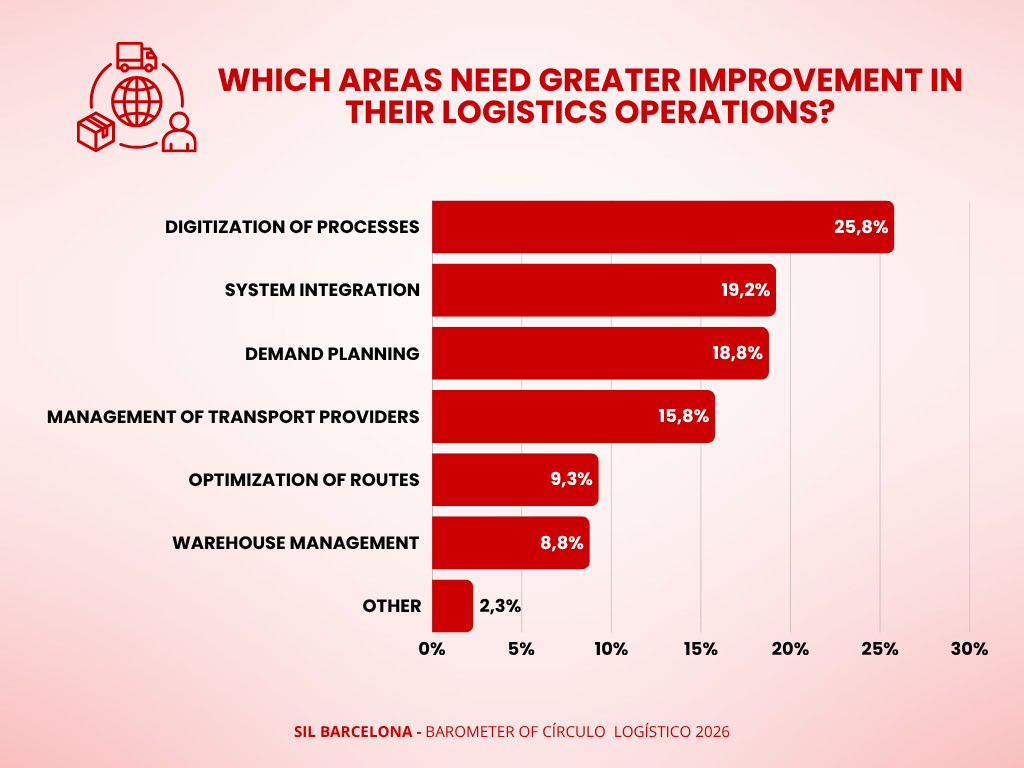
According to 25.8% of the professionals surveyed, the digitalisation of processes within logistics operations is the area that requires the greatest improvement. Other key aspects identified as needing enhancement include systems integration (19.2%); demand planning (18.8%); and transport‑provider management (15.8%).
Rising Transport Costs and Limited Budgets: Main Challenges
According to 26.4% of respondents, increase in transport costs are the main logistics challenge their companies are currently facing. This is followed by demand variability of demand and planning difficulties, cited by 19.8%, as well as insufficiently digitalised processes or poorly integrated systems, highlighted by 15.2%
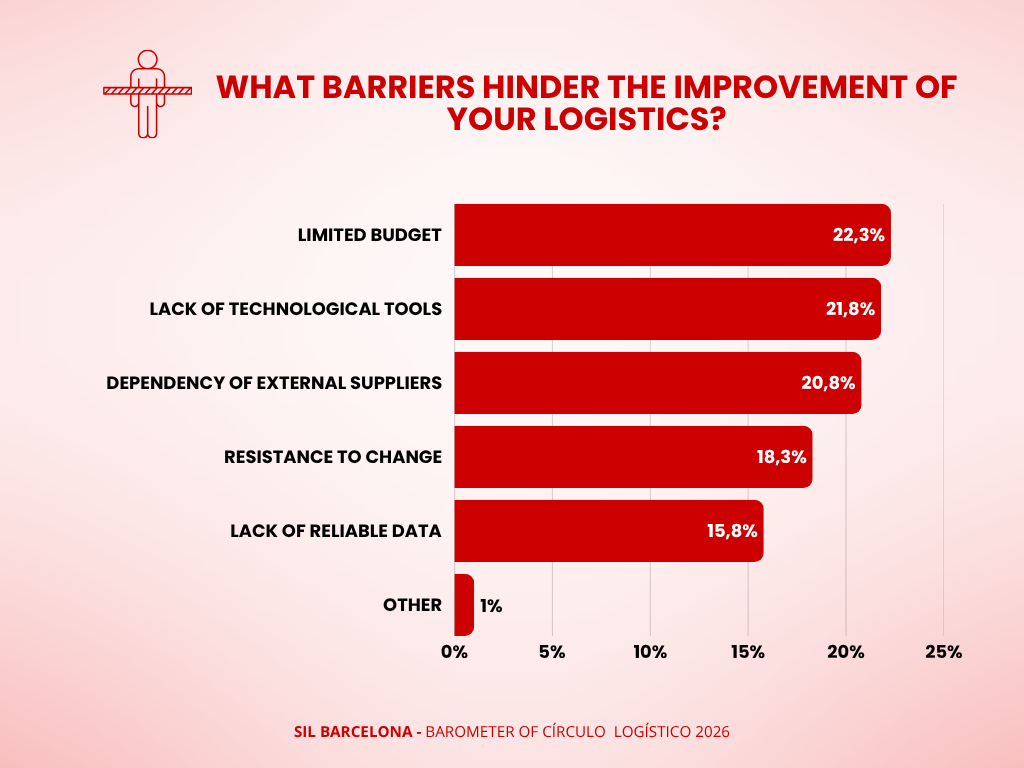
Regarding the difficulties faced by companies that consume logistics services, the main barrier is limited budget, according to 22.3% of respondents. This is followed by the lack of technological tools, highlighted by 21.8%; dependence on external providers, cited by 20.8%; and resistance to change, reported by 18.3%.”
Reliability, Sustainability and Automation: Key Priorities
The most valued criterion when selecting a transport provider is reliability, cited by 30.7% of respondents, compared with 21.4% who prioritise price and 15.4% who consider flexibility to be the most important factor.
Sustainability will continue to carry significant weight in logistics decision‑making, according to 92.5% of respondents, compared with 7.5% who consider it to be of little relevance.
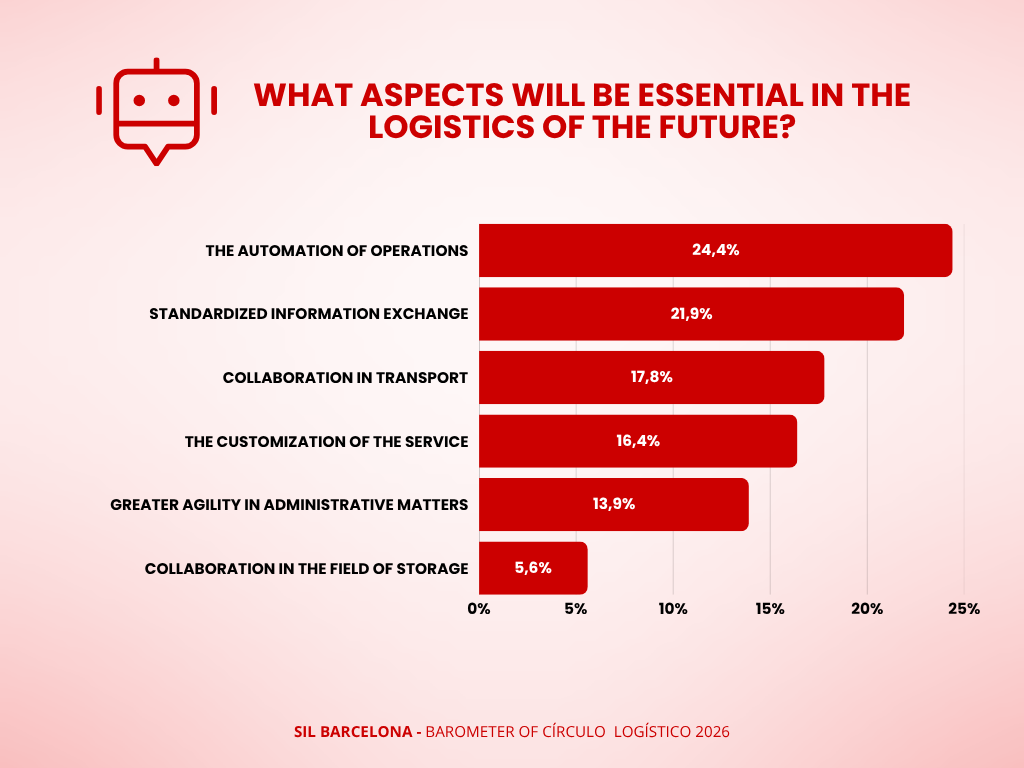
Other essential aspects in the logistics of the future will include: the automation of operations (24.4%), the exchange of standardised information (21.9%), collaboration in transport (17.8%) and service personalisation (16.4%)
Profile of the Sample
The Logistics Circle Barometer is the annual study published by SIL Barcelona, offering an in‑depth analysis of the challenges and needs of companies that consume logistics services. On the occasion of the 28th edition of the trade fair and the 16th edition of the barometer, the study gathered input from 1,053 professionals holding managerial and supervisory positions in Logistics or Supply Chain departments in Spain, representing a wide range of industrial sectors.
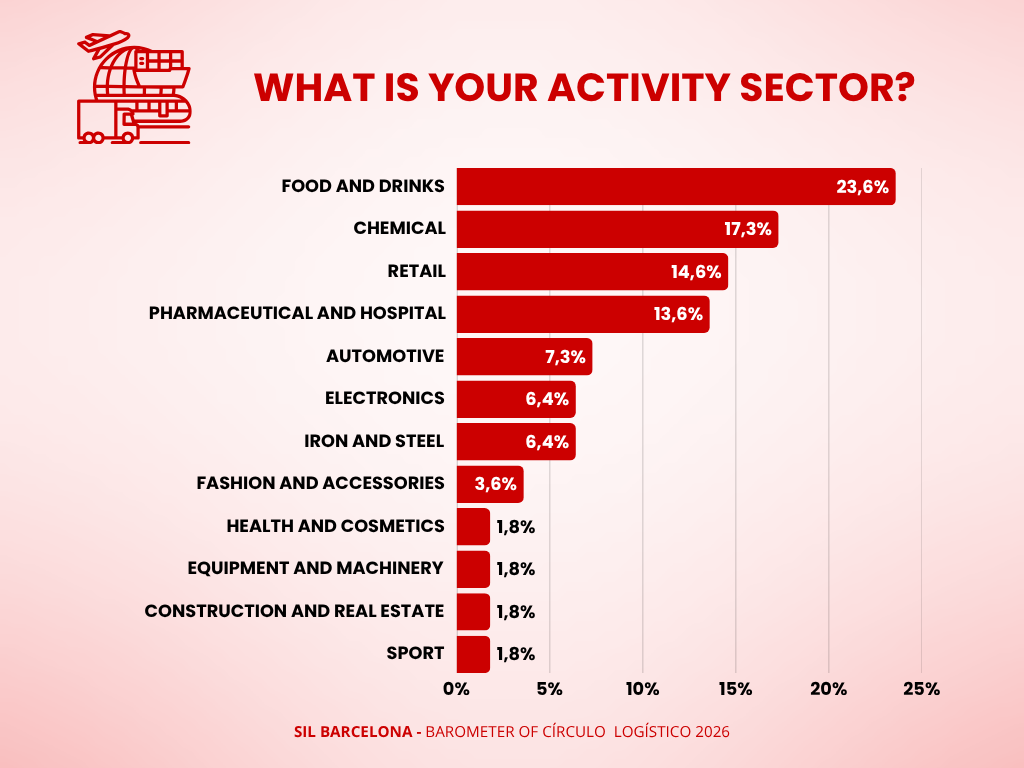
Among the profiles of the professionals surveyed, 23.6% are heads of logistics departments in companies from the food and beverage sector; 14.6% are responsible for logistics in retail companies; 17.3% work in the chemical industry; and 13.6% oversee logistics in companies operating in the pharmaceutical sector.