BWAW 2026 brings together business leaders to define the roadmap toward real equality
6 de March de 2026
- The Barcelona Woman Acceleration Week has concluded three days of meetings that brought together 77 high-level speakers in 15 sessions, with more than 3,000 professionals following the event either in person or online through the event platform and RTVE Play.
- Pere Navarro, Executive President of the CZFB, emphasized that “BWAW has demonstrated that gender equality is not only a matter of justice, but also a key factor of competitiveness for our companies.”
- Blanca Sorigué, General Director of the CZFB, pointed out that “BWAW 2026 has showcased the ability of female talent to transform business and industry through a more diverse and collaborative vision.”
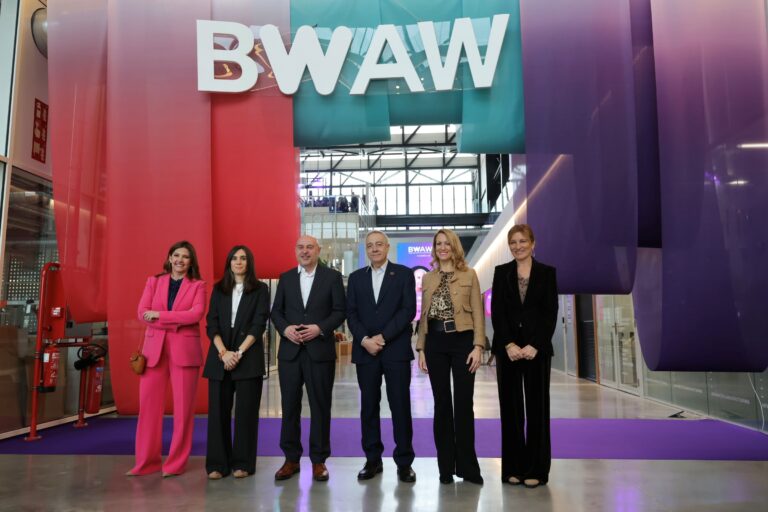
Barcelona, 6 March 2026.- During a week in which Barcelona was full of activity with the celebration of the Mobile World Congress, just a few meters away from this major event, at DFactory Barcelona, the largest Industry 4.0 ecosystem in Southern Europe, the sixth edition of the Barcelona Woman Acceleration Week took place over three days.
BWAW 2026 has today concluded its sixth edition, surpassing 3,000 attendees who have followed the event both in person and online via the event website or the RTVE Play digital platform of Radio Televisión Española. The leading event for advancing gender equality in the business world once again became a highly balanced debate, with participation from both men and women—because it is everyone’s responsibility.
BWAW 2026, organized by the Consorci de la Zona Franca de Barcelona with the collaboration of the Incyde Foundation of the Chambers of Commerce of Spain, the support of Ferrocarrils de la Generalitat, EBRO, 19 partner entities and the notable sponsorship of MERLIN, was held at DFactory Barcelona and featured 15 debate sessions with 77 high-level speakers, who offered solutions and proposals to progress in terms of parity and equal opportunities.
This edition addressed topics and solutions that promote gender parity, equal opportunities, and female leadership in fields such as aerospace, real estate, finance, video games, science, talent, architecture, health, digitalization, communication, multilateralism, law enforcement, corporates, and labor unions.
In this regard, Blanca Sorigué, General Director of the CZFB, stressed that “once again it has become evident that gender equality is an essential driver for innovation and sustainable growth. BWAW 2026 has shown the capacity of female talent to transform business and industry through a more diverse and collaborative vision. We have generated reflections, alliances, and commitments that bring us closer to a fairer future, but unfortunately, there is still a long way to go. In this edition, we outlined solutions and measures to shorten that path, which requires the involvement of society as a whole to make it possible.”
For his part, Pere Navarro, Executive President of the CZFB, emphasized that “during the three days of BWAW 2026, it has been demonstrated that gender equality is not only a matter of justice, but also a key factor of competitiveness for our companies and industries. We have seen talent, vision, and commitment to move toward more diverse and inclusive environments. From the CZFB, we will continue to promote initiatives that strengthen female leadership as a driver of transformation.”
An inclusive approach from architecture
The day began with the BArquitecture vertical and the session “Barcelona, World Capital of Architecture 2026: an inclusive perspective”, moderated by Maria Buhigas, Chief Architect of the Barcelona City Council. High-level speakers included Nerea Amorós, Distinguished Researcher at ETSAB-UPC; Eulàlia Gómez-Escoda, Director of ETSAB-UPC Barcelona Tech; and Albert Nogueras, President of AJAC.
The session highlighted that inclusive architecture recognizes the diversity of uses and experiences and integrates them from the early phases of design. It stressed that urban spaces can either reproduce inequalities or serve as tools to reduce them through gender-sensitive planning. Active participation of women and underrepresented groups improves the functionality and quality of built environments. The speakers also underlined that diversity within professional teams enriches architectural solutions. In conclusion, gender equality in architecture is essential for creating fairer, safer, and more inclusive cities for all.
The role of women in aerospace innovation
The final day of BWAW highlighted the need for the aerospace sector to integrate a gender perspective when designing technologies, missions, and work environments that represent the real diversity of society.
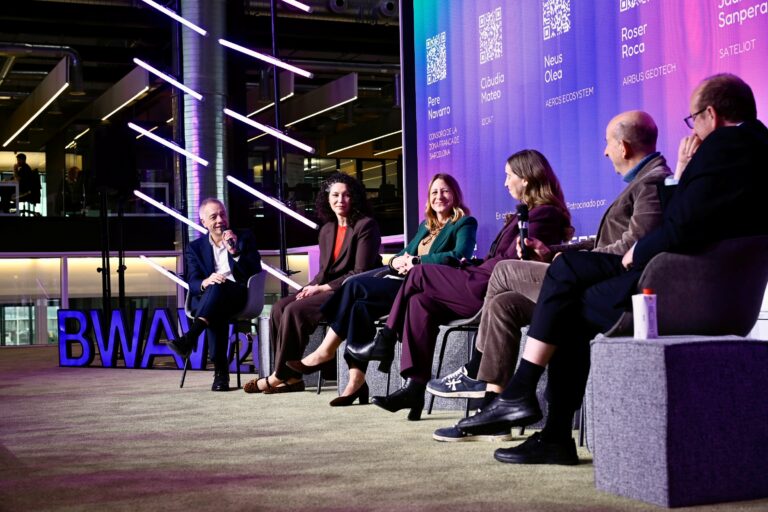
Jaume Sanpere, CEO of Sateliot, stated that “gender equality is a strategic competitiveness decision, especially in high-tech sectors such as space, defense, and telecommunications.” He emphasized that in a market where talent is scarce, not activating all available talent means losing speed, innovation, and technological capacity. According to Sanpere, promoting equality “is essential to guarantee Spain’s and Europe’s technological sovereignty.”
Jordi Voltas, Director of ESEIAAT – UPC, highlighted that although engineering programs have traditionally had low female representation, “in the aerospace field, UPC has gone from 13% to 22% women in the past ten years.” He added that “academic indicators show slightly better results for women: higher efficiency, more graduation, and less dropout.” His intervention underscored that promoting equality also means recognizing and fostering this already excellent-performing talent.
Neus Olea, Director of AeroS Ecosystem, pointed out that the aerospace, space, and defense sectors are undergoing profound transformation in Europe, where talent is the main critical success factor. She advocated for “equality based on merit, capability, and real access,” warning of barriers that hinder STEM vocations and the visibility of the sector among young people. She stressed that the ecosystem’s competitiveness depends on leveraging 100% of the available talent, ensuring that no vocation is excluded due to cultural factors or perception.
Claudia Mateo, Business Lead for Space Innovation at the i2CAT Research Centre, highlighted that “innovation and equality must advance together in the space sector, where female visibility is crucial to avoid losing half of the talent and to attract new STEM vocations.” She stressed that “diversity drives creativity and team resilience, essential to tackle complex technological challenges.” She also advocated for more women in leadership positions, within a culture that values merit above gender.
This session also included the participation of Roser Roca, General Director and CEO of Airbus Geotech, and was moderated by CZFB Executive President Pere Navarro.
Spotlight on the health and fintech sectors
The sixth edition of the Barcelona Woman Acceleration Week concluded with a session dedicated to the health sector, titled “From the laboratory to real impact: biotechnology led by women”, and another focused on finance: “Investing in equality: strategies for a more equitable financial system.”
The Consorci de la Zona Franca de Barcelona confirmed that in March 2027 it will hold the seventh edition of BWAW.