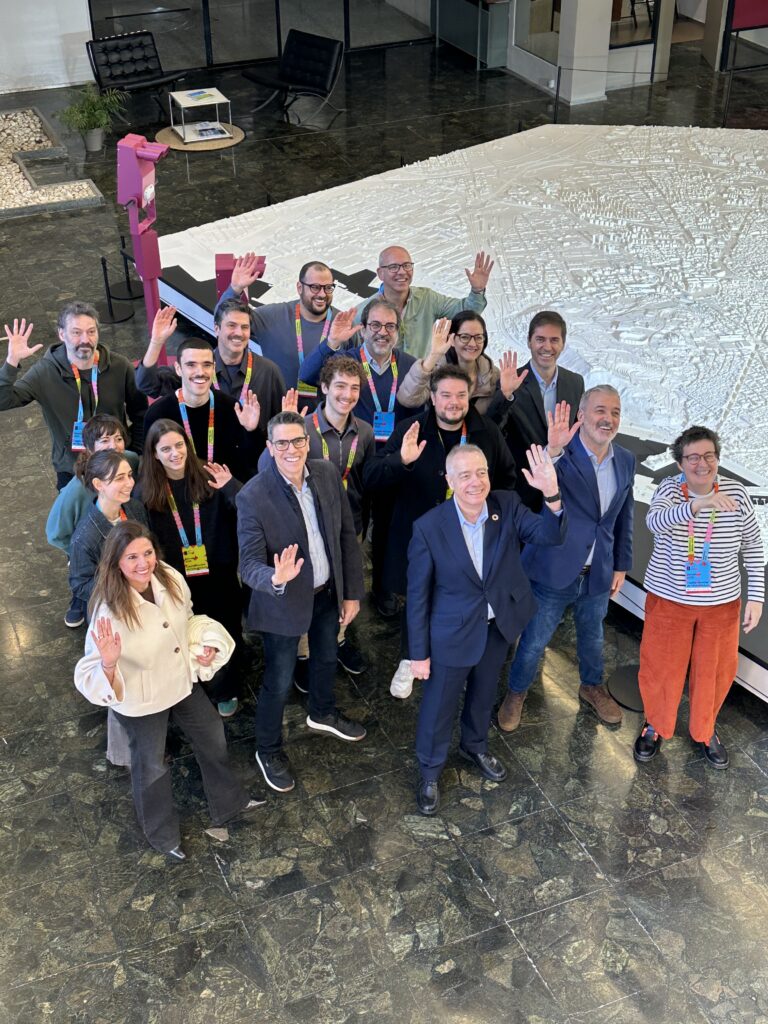
China’s leading industrial robotics company lands in Spain through DFactory Barcelona
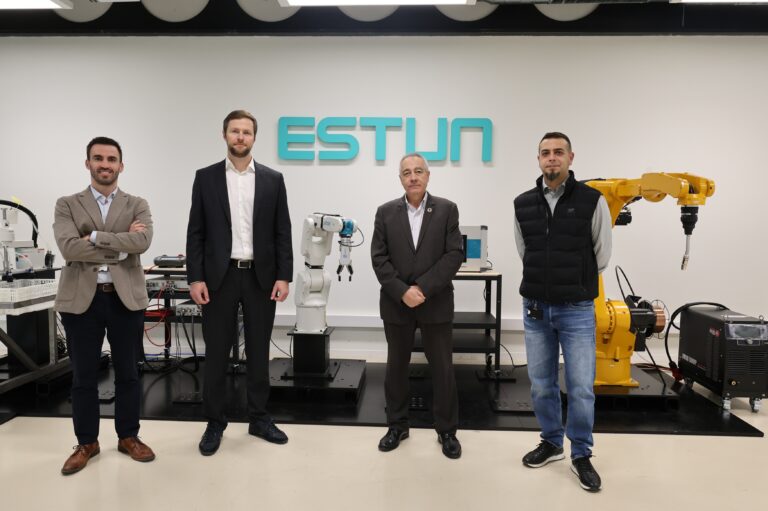
Estun
12 de January de 2026
- After several years holding the second position in the largest and most competitive market in the world, China, in 2025 the company has achieved leadership, surpassing the main traditional industrial robotics manufacturers.
- ESTUN Robotics has launched its strategic expansion project in Europe, aiming to boost the competitiveness of European industry and support its key clients, such as BYD and CATL. As part of this initiative, a factory has been opened in Poland with a production capacity of up to 15,000 robots per year.
Barcelona, January 12, 2026.- Estun, the leading company in the Chinese industrial robotics market, has arrived in Spain through its new facilities located in DFactory Barcelona, the international benchmark ecosystem for Industry 4.0, promoted by the Consorci de la Zona Franca de Barcelona (CZFB).
With nearly 30 years of innovation and a constant investment in R&D of around 10% of annual revenue, Estun has established a comprehensive value chain in automation based on three main businesses: industrial robots, industrial automation, and digital industrial solutions. The company’s mission is to make advanced automation accessible and reliable, offering flexible solutions that enable businesses of any size to innovate and grow. Estun combines a broad product portfolio with intuitive platforms and strong service support. Backed by continuous R&D and a growing global network of partners, Estun offers scalable automation, cost-effective performance, and a wide ecosystem of solutions tailored to diverse applications.
Founded in 1993 and headquartered in Nanjing, China, Estun employs around 5,000 people worldwide. With nearly 30 years of continuous R&D and a steady investment in innovation, the company was recognized by Forbes in 2020 as the only Chinese industrial robotics company included in the list of China’s Most Innovative Companies. Estun has a strong strategic focus on Europe, with a production plant in Poland capable of manufacturing 15,000 robots annually. Estun offers a complete range of robots — including six-axis models, SCARA, and collaborative robots — with load capacities ranging from 3 to 1,200 kg, covering applications in welding, consumer goods, new energy, automotive, and aerospace. Leveraging its own motion control and key components, Estun ensures reliable and cost-effective performance while driving next-generation projects such as humanoid robotics.
Dmitry Kapishnikov, CEO of ESTUN Iberia, explained that the company’s presence at DFactory Barcelona “reflects our strong commitment to the European market and to providing close, top-level support. By integrating into this industrial innovation hub, we strengthen collaboration with local industries, promote joint R&D, and offer advanced automation solutions tailored to the needs of Spain and Europe”.
Pere Navarro, special state Delegate at the CZFB, highlighted that “the incorporation of a world-leading industrial robotics company, such as Estun, enriches the DFactory Barcelona ecosystem and strengthens our commitment to promoting innovation, digitalization, and advanced automation within the productive fabric. This is great news that will contribute to generate new opportunities for technological development and consolidate the positioning of the Barcelona Metropolitan Region as an international benchmark hub for next-generation industrial solutions.”
Finally, Blanca Sorigué, General Director of CZFB, stated that “Estun’s commitment to DFactory strengthens our dedication to creating a robust ecosystem capable of attracting companies that drive advanced automation and provide high-impact solutions for industry. At DFactory Barcelona, we are expanding technological diversity and consolidating our role as a leading platform for the development of innovative projects in Europe.”
DFactory Barcelona has become the international benchmark ecosystem for Industry 4.0, hosting more than 40 multinational companies, medium and small enterprises, and research centers that develop pioneering projects in fields such as robotics, sensors, 3D printing, cybersecurity, augmented and virtual reality, artificial intelligence, blockchain, and nanotechnology. It is currently at full occupancy and has therefore begun expansion works to increase its surface area from the current 17,000 m² to 60,000 m² by the end of 2026 with the construction of four new buildings.