
Additive Manufacturing: Complete Industrial Guide 2026
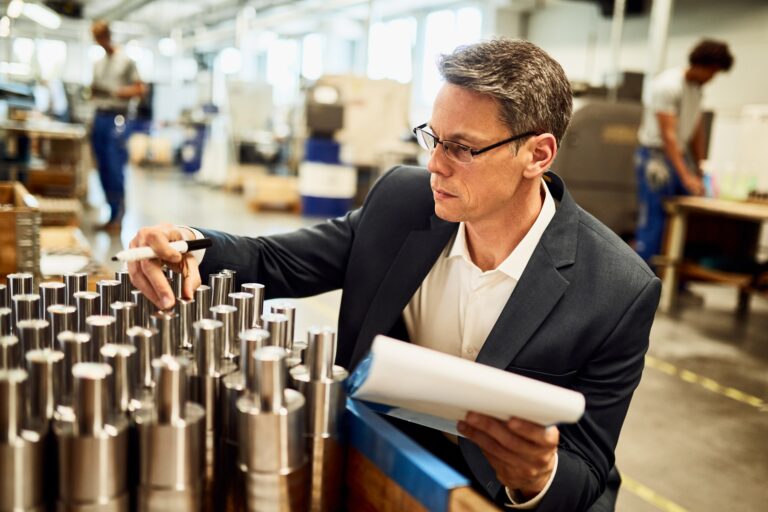
Mid adult engineer analzying quality of manufactured products at steel factory.
21 de April de 2026
Additive manufacturing builds three-dimensional parts by adding material layer by layer from a CAD model, unlike conventional machining that removes material from a block. It reduces waste by up to 90%, shortens prototyping cycles from weeks to days, and is already producing final parts in aerospace, medical and automotive. At DFactory Barcelona, the ADDiVAL centre with HP Multi Jet Fusion technology enables the validation of real industrial use cases.
Additive manufacturing has become one of the key technologies within the Industry 4.0 ecosystem. Beyond prototyping, it is now a strategic tool for industrial manufacturing, enabling the production of final parts with greater flexibility, reduced waste, and more efficient supply chains.
This guide explains what additive manufacturing is, how it works, the processes and materials available, its industrial applications, and how to realistically integrate it into production operations.
What is additive manufacturing?
Additive manufacturing (as defined by ISO/ASTM 52900) refers to a set of technologies that create three-dimensional objects by adding material layer by layer from a digital model designed using CAD software. Unlike traditional processes, material is not removed from an initial block; only the material required is built.
When people refer to industrial 3D printing or additive manufacturing, they are talking about the same principle: transforming a digital design into a physical part using controlled additive processes.
Difference between additive and subtractive manufacturing
The key difference lies in how the final geometry is produced:
- Subtractive manufacturing: machining, turning or milling by removing material from a solid block.
- Additive manufacturing: progressive construction of the part without unnecessary waste.
While subtractive manufacturing is limited by tools and mechanical access, additive manufacturing enables complex geometries, optimized internal structures and designs that are impossible to achieve using conventional methods.
Additive manufacturing processes
ISO/ASTM 52900 defines seven families of additive manufacturing processes. The three most relevant in industrial environments are:
Powder Bed Fusion (PBF)
What is it?
A process that selectively fuses layers of metal or polymer powder using a laser or thermal energy source. It is one of the most advanced industrial additive manufacturing processes.
Main advantages:
- High dimensional accuracy (±50 μm)
- Homogeneous mechanical properties
- Suitable for certified end-use parts
Reference technologies: HP Multi Jet Fusion, EOS, SLM Solutions. Commonly used in aerospace, medical, and advanced engineering applications.
Directed Energy Deposition (DED)
What is it?
A process that combines metal powder or wire with a focused energy source (laser, plasma, or electron beam). It is typically used for component repair, structural reinforcement, and large-format parts.
It stands out for its flexibility and its ability to integrate into hybrid industrial environments, combining additive and subtractive manufacturing within the same machine.
Material extrusion (FFF/FDM)
What is it?
The most widely known 3D printing process, based on melting and depositing thermoplastic filament layer by layer.
Although traditionally associated with prototyping, there are now industrial solutions focused on:
- Functional parts
- Jigs and fixtures
- On-demand production
Its cost–performance ratio makes it the most common entry point for companies starting with additive manufacturing.
Materials for additive manufacturing
Material development is a key driver of industrial adoption. Today, the most commonly used materials include:
- Technical polymers: PA11, PA12, TPU, ABS, PETG, PEEK
- Metals: stainless steel, aluminum AlSi10Mg, titanium Ti6Al4V, Inconel 718
- Composites: carbon- or glass-fiber reinforced materials
Material selection depends on mechanical, thermal, and regulatory requirements. In industrial contexts, material traceability and repeatability are critical for validation and certification.
Industrial applications of additive manufacturing
Additive manufacturing has moved from the lab to the production line across multiple sectors, supported by specialized hubs such as the 3DFactory Incubator.
Aerospace
Additive manufacturing enables weight reductions of up to 55% in structural components, functional integration into single parts, and a reduction in assembly operations. Operational benefits include:
- Lower fuel consumption
- Higher reliability
- Reduced operating costs
Automotive
The automotive industry uses additive manufacturing both in development and production. Common applications include:
- Functional prototypes
- Customized tooling
- Short production runs of end-use parts
- Long-tail spare parts and components for discontinued vehicle models
Rapid iteration capabilities accelerate innovation and reduce time to market.
Medical
One of the most representative sectors. Personalization is key for implants, prosthetics and patient-specific surgical guides. Materials such as titanium Ti6Al4V and PEEK comply with biocompatibility standards (ISO 10993) required under European MDR regulations.
Advantages of additive manufacturing
Waste reduction
By building only what is needed, additive manufacturing reduces material waste by up to 90% compared to machining, supporting circular economy principles, sustainability and cost optimization per kilogram.
Complex geometries and functional optimization
Design freedom enables lightweight lattice structures, conformal cooling channels and multifunctional components that enhance performance, particularly in high-performance engineering environments.
Faster time-to-market
Prototyping cycles are reduced from weeks to days. Design iterations can be completed in 24–48 hours, compared to 2–4 weeks with conventional tooling.
How to implement additive manufacturing in your company
Successful industrial adoption requires a strategic approach, not just equipment acquisition. Recommended roadmap:
- Select viable use cases: high-value, low-volume or geometrically complex parts
- Adapt CAD workflows: topology optimization and Design for Additive Manufacturing (DfAM)
- Train technical teams: process engineering, post-processing, metrology
- Ensure quality and repeatability: statistical process control and material traceability
- Scale progressively: validate ROI case by case before full industrialization
Additive manufacturing at DFactory Barcelona
DFactory Barcelona, the Industry 4.0 hub of the Consorci de la Zona Franca, promotes additive manufacturing as a key driver of industrial competitiveness within an advanced innovation ecosystem.
ADDiVAL and HP 3D Printing
With the integration of ADDiVAL into the DFactory ecosystem, cutting-edge HP Multi Jet Fusion technologies are applied to real industrial manufacturing—not just prototyping. Work is carried out on processes, materials, and use cases aligned with industry needs.
This approach enables companies to test, validate and scale additive manufacturing solutions with both technological and strategic support.
Frequently asked questions about additive manufacturing
What is the difference between additive manufacturing and 3D printing?
They are equivalent terms. “3D printing” is the popular term; “additive manufacturing” is the technical and standardized definition (ISO/ASTM 52900) used in industrial contexts.
What materials can be used in industrial additive manufacturing?
Technical polymers (PA12, TPU, PEEK), metals (stainless steel, aluminum, titanium, Inconel) and fiber-reinforced composites. Selection depends on mechanical, thermal and regulatory requirements.
Is additive manufacturing cost-effective for small series?
Yes. For volumes between 1 and 10,000 parts, the absence of tooling can make it more competitive than injection molding or machining, especially for complex or customized parts.
How much does it cost to implement additive manufacturing?
It varies by process: from €3,000–15,000 for an industrial FFF system to €250,000–800,000 for metal PBF systems. The most efficient approach is validating use cases at a center like ADDiVAL before investing.
Which sectors use additive manufacturing the most?
According to the Wohlers Report, aerospace, medical, automotive, consumer goods and industrial tooling account for more than 70% of adoption.
Does additive manufacturing replace traditional processes?
No. It complements them. The right strategy is to identify parts where additive manufacturing delivers clear value (geometry, customization, short series) while maintaining conventional processes for high-volume production.
Conclusions
Additive manufacturing is no longer an emerging technology—it is a mature tool that is transforming how industrial components are designed, produced and distributed. Its ability to reduce waste, enable complex designs and respond to changing markets makes it a key element of modern manufacturing.
For companies seeking flexibility, efficiency and sustainability, additive manufacturing represents a clear competitive advantage when implemented with expertise, strategy and alignment with business objectives.
Would you like to validate an additive manufacturing use case in your company?
Contact DFactory Barcelona and discover how ADDiVAL can support you throughout the process.
Related articles
Engineering team working in smart factory, collecting and analyzing data. Teamworking colleagues using tracking software in industry 4.0 industrial plant equipped with advanced sensors, camera A
The Power of Industrial Big Data: Revolutionizing Efficiency in Industry 4.0
Big Data in Industry 4.0: Transforming Manufacturing
Computer Vision: The Revolution in Industrial Automation